Physical Address
304 North Cardinal St.
Dorchester Center, MA 02124
Physical Address
304 North Cardinal St.
Dorchester Center, MA 02124

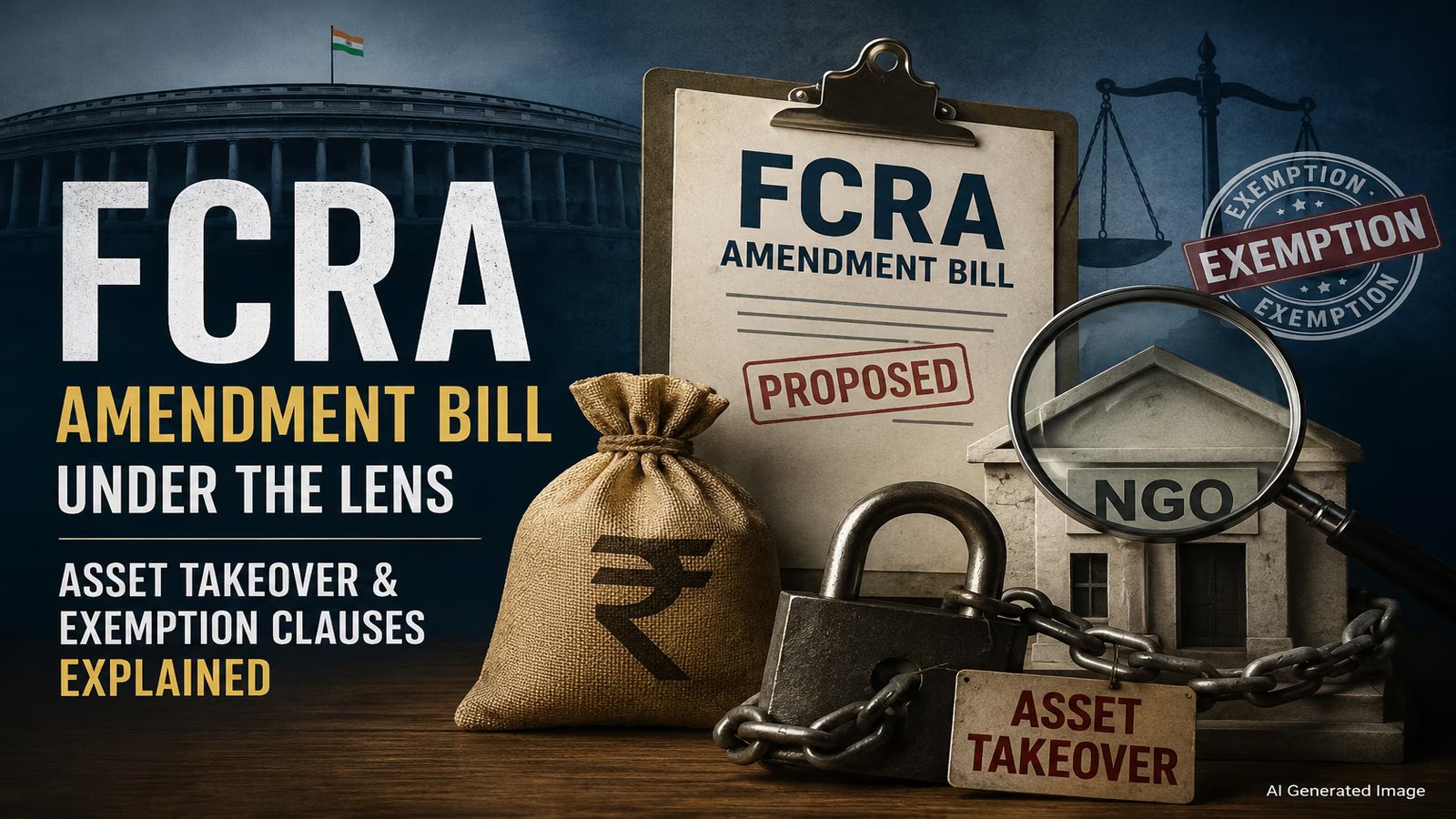
The FCRA Amendment Bill has recently come under intense scrutiny from legal experts and policy analysts. The proposed legislation seeks to modify India’s existing foreign funding law, specifically targeting how non-governmental organizations (NGOs) manage their assets and receive foreign contributions.
According to reports from CNBC-TV18, the primary concerns revolve around new provisions that would grant the government broader authority to take control of NGO assets. Additionally, the bill introduces specific exemption clauses that allow certain organizations to bypass standard regulatory requirements, a move that critics argue creates an uneven playing field.
For the non-profit sector and international donors, the FCRA Amendment Bill represents a significant shift in the regulatory landscape. Proper oversight of foreign funds is essential for national security and transparency; however, the balance between regulation and operational freedom is delicate.
Legal experts, including former Lok Sabha Secretary General PDT Achary, have expressed concerns that the bill may grant the government excessive discretionary powers. The potential for a “sledgehammer effect” suggests that the legislation might inadvertently hinder the legitimate work of NGOs that rely on international support to carry out humanitarian, educational, and social welfare projects across India.
The Foreign Contribution (Regulation) Act (FCRA) is the primary legislation governing the receipt and usage of foreign funds by individuals and organizations in India. Over the years, the government has tightened these rules to ensure that foreign money does not influence domestic political or social issues in ways that contradict national interests.
Compliance under the FCRA is mandatory for any organization seeking to receive foreign grants. Failure to adhere to these strict reporting and usage guidelines can lead to the cancellation of an organization’s license, effectively halting its ability to operate. The FCRA Amendment Bill is the latest in a series of legislative efforts to refine these controls.
The future of the FCRA Amendment Bill remains a subject of intense debate. As the legislative process continues, stakeholders are watching to see if the government will address the concerns raised by legal experts regarding the potential for overreach.
If passed in its current form, NGOs will likely need to conduct a thorough review of their internal governance and asset management structures. Organizations should prepare for more rigorous scrutiny and potentially higher compliance costs as they navigate these evolving legal requirements.
Readers should monitor official government gazettes for the final text of the bill and any subsequent rules or notifications. It is also advisable to keep an eye on legal challenges or public consultations that may arise as the bill moves through the legislative process. Staying informed about how these changes impact the broader NGO sector will be crucial for donors and organizations alike.
Related reading: Gabit smart ring: 3 ways this health-tech startup is changing wellness
The bill aims to update the regulatory framework governing how NGOs in India receive and utilize foreign contributions, with a focus on increasing government oversight and control.
Experts are concerned that the bill grants the government too much discretionary power, particularly regarding the seizure of NGO assets and the granting of exemptions to select organizations.
If enacted, NGOs may face stricter compliance requirements and a higher risk of government intervention regarding their assets and foreign funding sources.
Source: cnbctv18.com