Physical Address
304 North Cardinal St.
Dorchester Center, MA 02124
Physical Address
304 North Cardinal St.
Dorchester Center, MA 02124

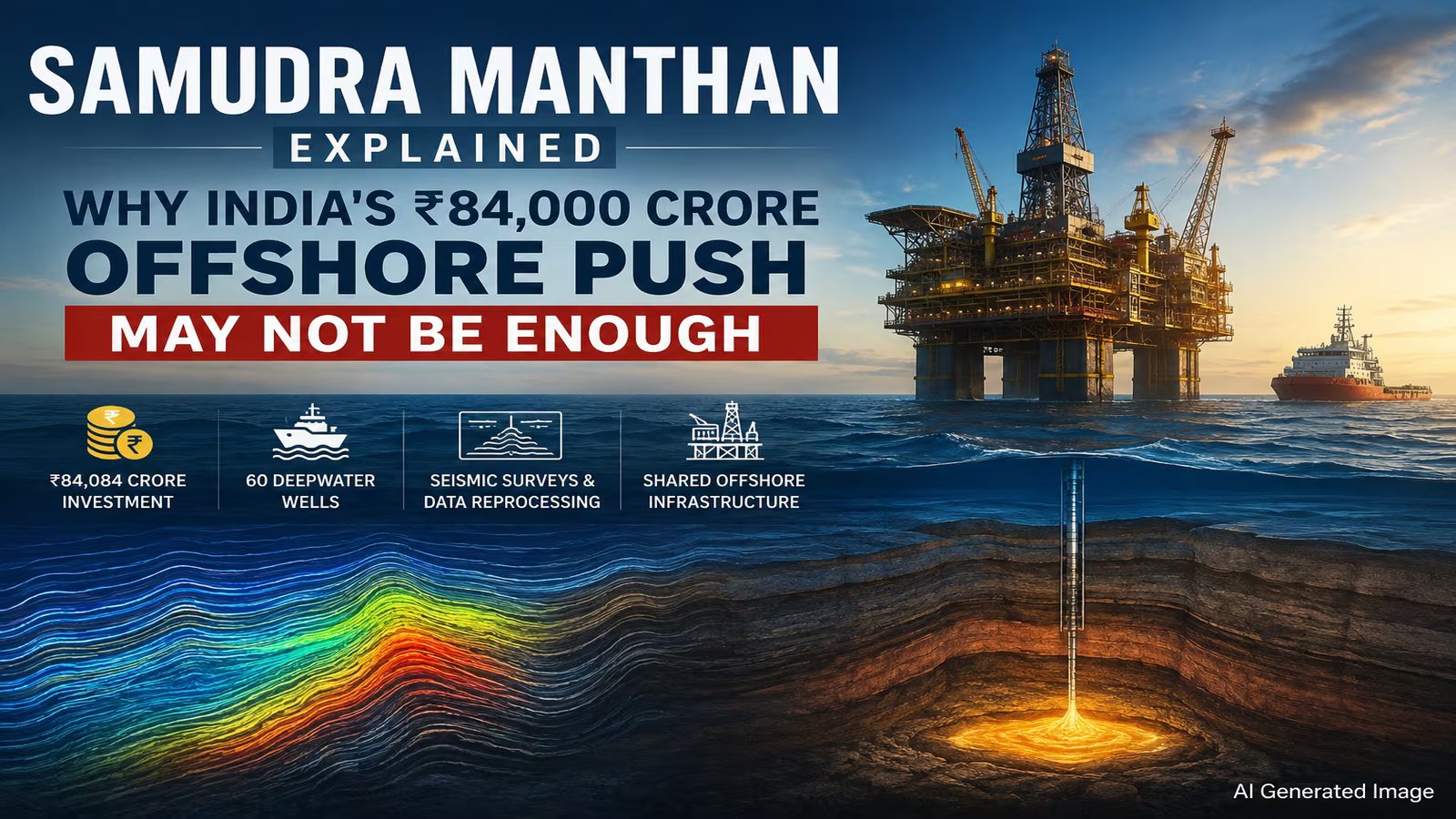
The Indian government has launched the Samudra Manthan programme, a strategic initiative designed to revitalize offshore oil and gas exploration. With a significant financial commitment of ₹84,000 crore, the program focuses on incentivizing drilling activities, conducting comprehensive seismic surveys, and developing shared infrastructure to lower entry barriers for energy firms.
According to cnbctv18.com, the initiative seeks to unlock the potential of India’s frontier offshore basins, which have historically remained under-explored despite their geological promise.
Energy security remains a top priority for India as the nation continues to experience rapid industrial growth. By reducing reliance on imported fuels, the Samudra Manthan project aims to stabilize the domestic energy supply chain. This push is critical for long-term economic resilience, as energy costs directly influence manufacturing and logistics expenses across the country.
However, industry experts suggest that capital injection alone may not suffice. The success of this massive investment depends on creating a business-friendly environment that can attract global energy giants to participate in high-risk, high-reward offshore projects.
Offshore exploration is a capital-intensive sector that requires significant technological expertise and regulatory clarity. Historically, India has relied heavily on imports to meet its domestic demand for crude oil and natural gas. The government has periodically introduced reforms to make the exploration and production (E&P) sector more attractive to private and international players.
The Samudra Manthan initiative builds upon these previous efforts by addressing specific bottlenecks, such as the lack of shared infrastructure and the need for updated geological data. By de-risking the initial phases of exploration, the government hopes to encourage more participation in the sector.
The long-term success of the Samudra Manthan framework will likely hinge on three critical factors: the speed of regulatory approvals, the implementation of competitive fiscal policies, and the discovery of commercially viable reserves. If the program succeeds in proving the viability of frontier basins, it could fundamentally shift India’s energy landscape. Investors and policymakers will be watching closely to see if these incentives translate into tangible drilling activity on the ground.
Moving forward, stakeholders should monitor updates regarding the specific fiscal incentives offered to participating firms. Additionally, the pace at which the government clears regulatory hurdles for new exploration blocks will be a key indicator of the program’s momentum. Future Economy & Policy reports will continue to track how these offshore developments impact the broader energy market.
Related reading: bomb kills three: The Critical, Shocking Update
The primary goal is to revitalize offshore oil and gas exploration in India to enhance national energy security and reduce import dependence.
The government has allocated ₹84,000 crore toward the Samudra Manthan program to support drilling, surveys, and infrastructure.
Success depends on faster regulatory approvals, attractive fiscal policies, and the discovery of commercially viable oil and gas reserves.
Source: cnbctv18.com